
Medicare Costs
Medicare Part A: Hospital Insurance
Medicare Part A helps cover your care when you are admitted to a facility. For the vast majority of Americans, there is no monthly premium for Part A, provided you or your spouse paid Medicare taxes for at least 10 years (40 quarters).
What Does It Cover?
Inpatient Hospital Care: Semi-private rooms, meals, general nursing, and drugs as part of your inpatient treatment.
Skilled Nursing Facility (SNF): Care after a qualifying 3-day inpatient hospital stay.
Hospice Care: Palliative care for terminal illness.
Home Health Care: Limited medically necessary skilled care.
2026 Out-of-Pocket Costs
If you have Original Medicare without a supplemental plan, you are responsible for the following costs per benefit period:
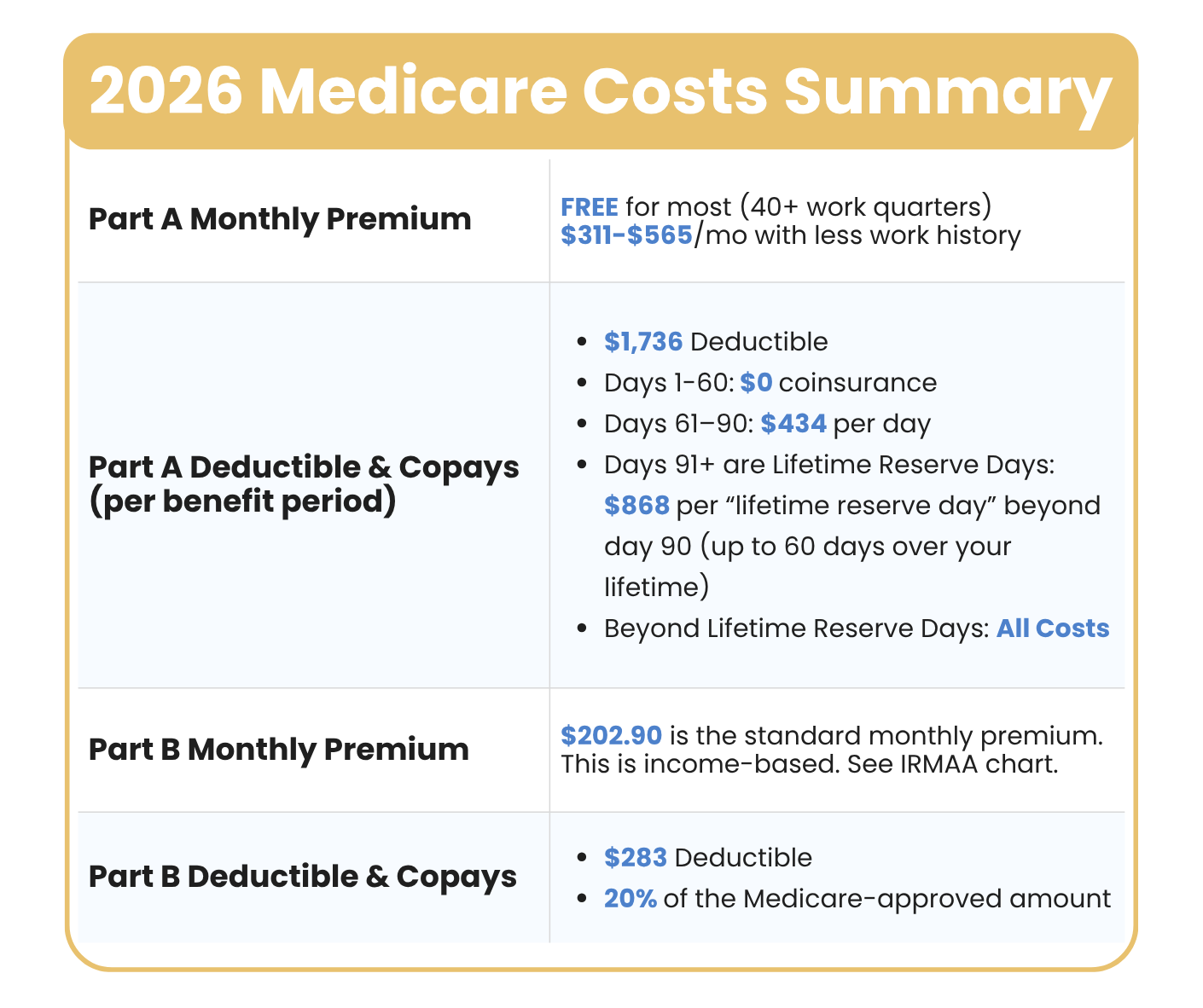
Quick summary of 2026 Medicare premiums and deductibles for Part A and Part B
What is IRMAA? The Medicare "High-Income Surcharge" Explained
If you’ve recently retired or are approaching age 65, you might hear the acronym IRMAA (Income-Related Monthly Adjustment Amount). In plain English, IRMAA is a surcharge added to your Medicare Part B and Part D premiums if your income exceeds certain thresholds.
While most people pay the standard premium, about 8% of beneficiaries pay more because of their income.
How is IRMAA Calculated?
The government uses a two-year look-back period. To determine your 2026 premiums, Social Security looks at your 2024 tax return. They specifically look at your Modified Adjusted Gross Income (MAGI), which is your adjusted gross income plus any tax-exempt interest (like municipal bond interest).
The 2026 IRMAA Brackets
If your 2024 income was above the thresholds below, you will see an extra charge on your monthly statement:
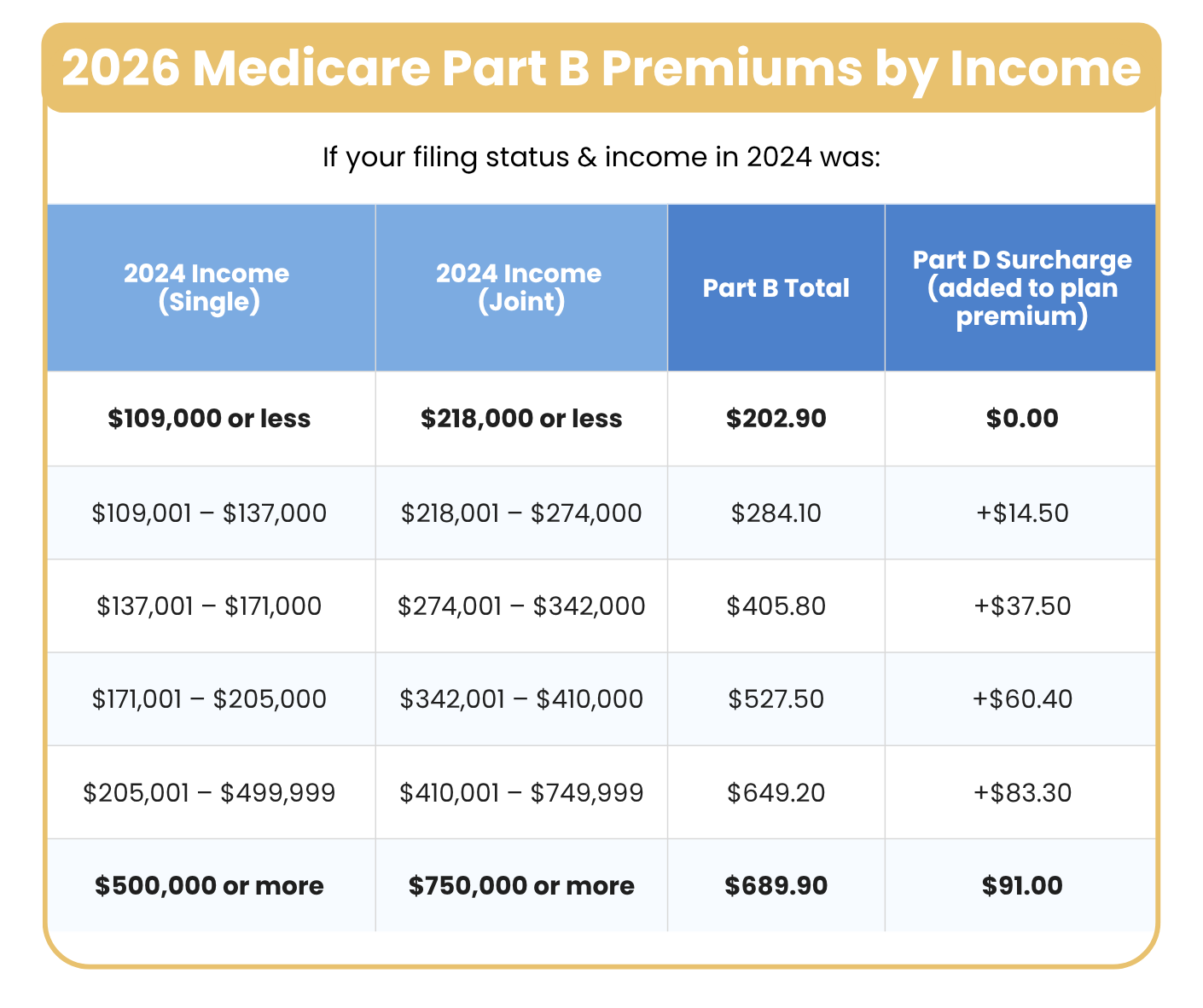
2026 Medicare Part B IRMAA Premiums by Income. Married filing separately has different brackets.
Can You Appeal IRMAA?
Yes! Because the government uses two-year-old data, it’s common for someone to have a high income in 2024 but a much lower income in 2026 because they retired.
If you experience a "Life-Changing Event," you can file Form SSA-44 to request a reduction in your surcharge. Qualifying events include:
Retirement (Work stoppage or reduction)
Death of a spouse
Divorce or annulment
Loss of income-producing property (beyond your control)
